
Workers are quitting their jobs in favour of careers in other countries as new research commissioned by The Social Hub lifts the lid on life as a digital nomad in Europe
From Italy to Spain and Portugal, new visa schemes are opening doors for Europeans – but The Social Hub’s first Digital Nomad Survey shows connection, community, and belonging remain the biggest challenges
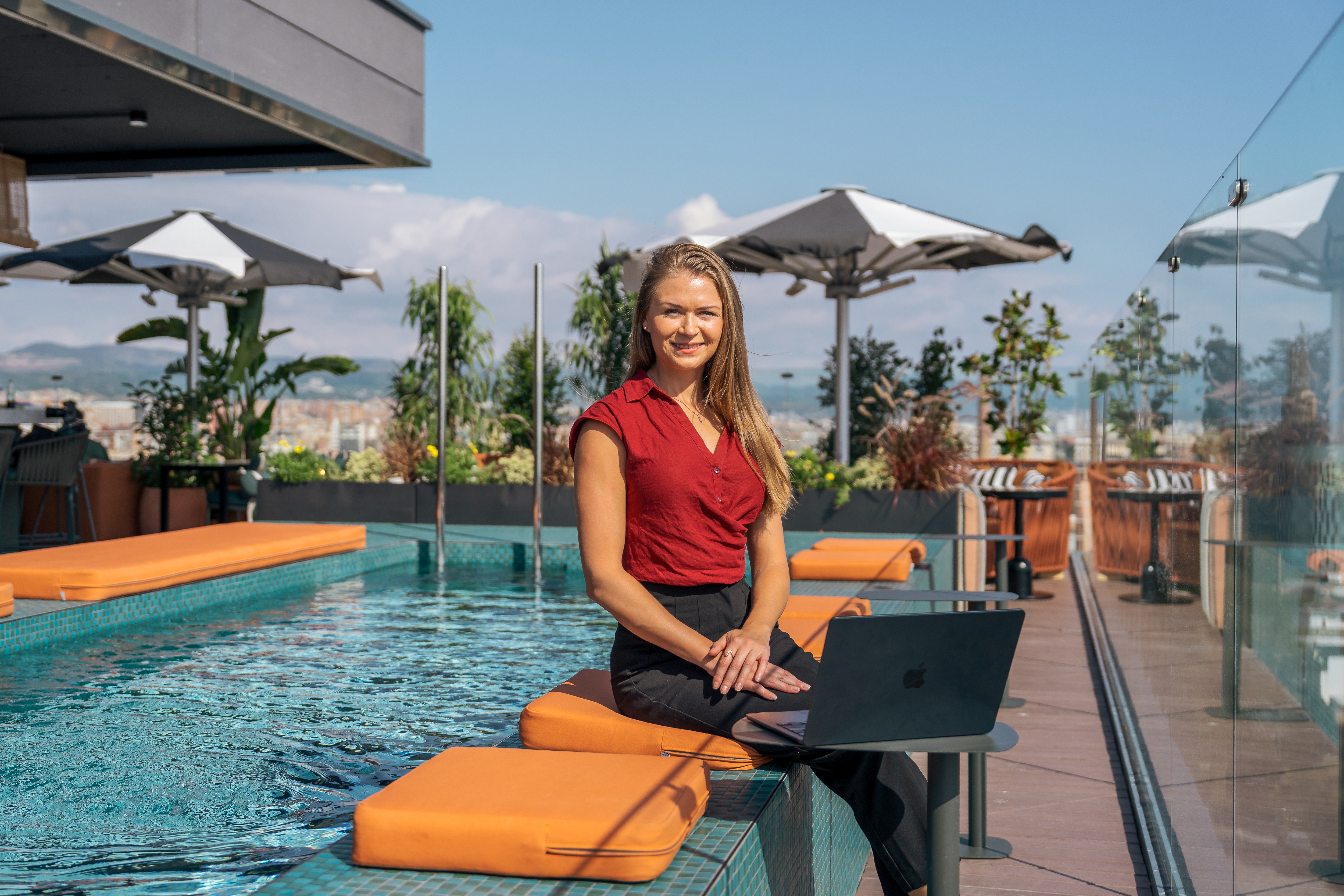
Amsterdam, November 2025 – The rise of digital nomad visas across Europe is encouraging more people to quit their jobs and take on new careers in other countries, new research commissioned by The Social Hub has uncovered.
Countries including Spain, Portugal, and Italy have all introduced special visas that make it easier for non-EU citizens to live and work abroad in the hope of attracting overseas talent and boosting economies.
And the schemes appear to be working, with almost three-quarters (74%) of respondents to a survey of more than 2,000 digital nomads living and working across Europe – including The Netherlands, Italy, the UK, and Spain – saying they had quit their job and moved to a different country because a visa made it possible, while the same proportion rejected destinations that did not offer one.
Nearly eight-in-ten (78%) also said they viewed the creation of a visa as a clear sign a country is welcoming to digital nomads.
Digital nomads are people who work remotely using technology while travelling or living in different locations, often moving between countries instead of working from a fixed office.
The research, conducted by independent insights agency Opinion Matters, also found the lifestyle cuts across careers, with strong representation in manufacturing, retail, catering, leisure, and IT and telecoms. Most nomads are mid-to-high earners, with 54% paid between €40,000 and €80,000 and more than a third earning above €80,000.
Gen Z (aged 18-28), the youngest group of nomads, are the most lifestyle-driven, with 40% saying they chose the path for a better quality of life and 42% citing opportunities to travel. They are also the least likely to feel integrated, with more than a third (37%) saying they do not feel immersed in local culture.
Millennials (29-44), now the largest cohort in the workforce, however, are more pragmatic. They emphasise freedom and flexibility as the chief benefit of nomad life, and are the most likely to make use of co-working spaces and events to stay connected.
Perhaps most surprising are Baby Boomers (61-79) – once seen as the least likely to embrace the lifestyle – where nearly half (45%) said they chose nomadism for a better lifestyle and the chance to travel – a higher proportion than any other age group. But they are also the generation most affected by isolation, with 45% saying loneliness is their biggest struggle, which was identified as a defining challenge for all generations.
A third of all nomads (34%) surveyed said loneliness is one of the main drawbacks of their lifestyle, while nearly one-in-five admitted to crying due to feelings of isolation. One-in-four have lied to friends and family about how much they are enjoying the experience. The data suggests community-focused spaces are increasingly seen as part of the answer.
Almost three in ten (29%) nomads have paid to join co-living or co-working hubs specifically to feel part of a community, while two in five regularly attend meetups or local events to build new social ties.
While nomads across Europe as a whole broadly agree on the benefits of freedom, travel and cultural discovery, the national differences reveal how visa policy and social dynamics shape behaviour in distinct ways.
In the Netherlands, reliance on visa support is even stronger than across Europe. While 75% of nomads overall have moved country because of a visa, this rises to 83% among Dutch respondents – one of the highest levels in Europe. Dutch nomads are also among the most affected by loneliness, with 41% citing it as their biggest struggle, compared with the Europe-wide average of 34%.
In Spain, while 30% of European nomads say they chose the lifestyle for a better quality of life, this figure is higher among Spanish respondents, who overwhelmingly cite work–life balance (43%) as a top advantage. Yet the emotional toll remains significant – more than a quarter of Spanish nomads admit they have lied to friends and family about enjoying the lifestyle – closely mirroring the European trend of 26%.
In Italy, digital nomad visas hold exceptional influence. Three-quarters of European nomads say visas were decisive in choosing the lifestyle, but for Italians the figure climbs to 78% – highlighting how powerfully visa schemes have reshaped a traditionally more rooted workforce. At the same time, 32% of Italian nomads say loneliness is a struggle, closely aligned with the European average and underscoring the shared emotional challenge across the continent.
In the UK, nomads are also more likely to view digital nomad visas as a welcoming signal, reflecting a strong appetite for destinations that actively support remote workers.
Tasha Young, Chief Membership Officer at The Social Hub, said the research confirmed what the company had observed first-hand: “The opportunity to travel, work in new environments, and push careers forward make life as a digital nomad very appealing. People living this lifestyle crave connection, community, and a place where they can feel at home while at the same time be immersed in local cultural fabric – even when they’re on the move. The evidence in our research confirms these important factors that have helped shape our approach from the very beginning. That’s why we're proud to have built inclusive, welcoming hotels where people from all backgrounds can connect – both personally and professionally – in environments designed for co-living, co-working, and co-creating in dynamic cities across Europe.”
The Social Hub, which operates 21 hotels across Europe's most dynamic cities including Amsterdam, Barcelona, Berlin, Florence, Porto, Rome, Glasgow, and Vienna, offers spaces that combine premium hotel accommodation, coworking, and community events, designed to give nomads a stable base and opportunities to connect.
With generational data showing that the youngest and oldest nomads in particular struggle most with belonging, the company says its role is not only to provide work-friendly environments but also to foster the social connections that keep people rooted.
Young added: “Europe is a unique region where freedom of movement opens up a wealth of opportunities for workers. It’s encouraging to see that within the EU, countries are introducing digital nomad visas and similar initiatives to make it easier for people to live and work across borders – and workers recognise that as a sign they are welcome and are responding enthusiastically.”